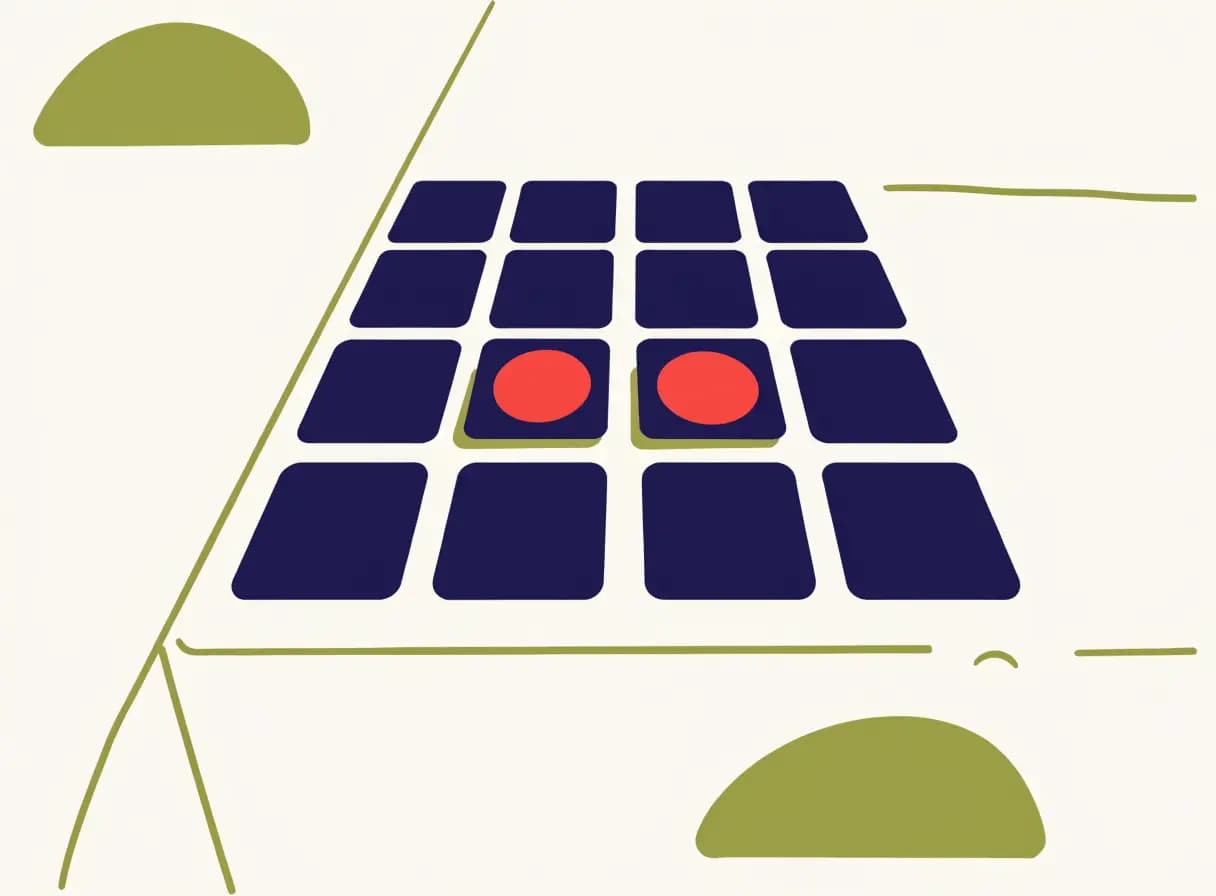
Kana Memory Match
Flip and match characters to their sounds.
6 · 8 · 12 pairs

Learn to read Japanese in weeks, not years — with bite-size lessons, games, and flashcards that know when you're about to forget.
Scroll to explore
Your name in Japanese
Type it and watch it become katakana — the script Japanese uses for foreign names. Keep the painting, share it anywhere.
Type it in Latin letters.
In katakana, that's:
A friendly approximation — katakana spells sounds, not letters, so a name can have more than one right spelling.
How it works
Meet a character, play with it, then let the scheduler bring it back at exactly the right moment.
Meet each hiragana with a memory image written in your own language, watch the strokes drawn in order, then trace it yourself with your finger.
19 lessons · 107 characters · 70% to unlock the next row
Lock it in with memory match, karuta and kana-popping — short rounds built for a phone, and they only ever use characters you have actually met.
3 games · personal bests · head-to-head duels

Every character becomes two flashcards — one to read it, one to recall it. They come back the day before you would have forgotten, and not a day sooner.
Scheduled by FSRS · 40 cards a session · rate in one keypress

The method
None of this is our opinion. Every part of the loop is built on published research on how memory actually works — open the note under any block and judge the sources yourself.
Memory decays on a predictable curve. Each review resets it — and makes the next fall slower. That widening gap is the whole product.
After you see the answer you rate yourself once. The four buttons carry four real dates, and the app shows you each of them before you choose.
Example intervals for a character you have just started. Yours will differ — the scheduler tracks a separate stability and difficulty for every single card.
Memory fades on a predictable curve. So instead of drilling a character twenty times today and never again, we bring it back just before you would have lost it — then stretch the gap a little further each time.
In the app: Reviews are scheduled by FSRS, an open-source algorithm, separately for every character and every direction you practise.
Cepeda, Pashler, Vul, Wixted & Rohrer (2006), “Distributed Practice in Verbal Recall Tasks: A Review and Quantitative Synthesis”, Psychological Bulletin — a synthesis of decades of experiments finding that spacing study reliably beats massing it.
Read the paperRe-reading a kana chart feels productive and does almost nothing. Pulling a character out of your own memory — even when it takes a second and stings a little — is what builds the path back to it.
In the app: Every quiz, review and game asks you to produce the answer. Nothing here is a passive read-through.
Roediger & Karpicke (2006), “Test-Enhanced Learning: Taking Memory Tests Improves Long-Term Retention”, Psychological Science — the classic demonstration of the testing effect.
Read the paperA character sticks once it becomes an image. But the image only works if it is built in a language you actually think in. く is a bird’s open beak — منقار طائر.
In the app: All 107 hiragana ship with a memory image written in English and in Arabic — written for Arabic speakers from scratch, not translated from the English.
The keyword-mnemonic method for learning kana and characters; it is the same principle behind the Japan Foundation’s official “Hiragana Memory Hint” apps.
Japan Foundation — Memory HintWatching a character is not the same as making one. The motion of drawing it leaves a second trace in your memory, and it is often the one that survives.
In the app: Every lesson animates the stroke order first, then hands you the brush: trace the character yourself, scored gently — we celebrate the attempt, not the millimetres.
Longcamp, Zerbato-Poudou & Velay (2005), “The Influence of Writing Practice on Letter Recognition: A Comparison between Handwriting and Typing”, Acta Psychologica — learners trained by hand recognised letters more reliably than learners trained on a keyboard.
Read the paper107
hiragana, every one with a memory image
19
lessons, in teaching order
2
flashcards per character — read it, recall it
70%
to unlock the next row, checked on the server
21
days a memory must hold before we call it strong
Games
Short rounds, real recall, personal bests — and every one drawn from Japanese card-play, not from a slot machine.
Flip and match characters to their sounds.
6 · 8 · 12 pairs

Hear it, spot it, tap it — after Japan's lightning-fast card-grabbing game.
60-second round · combo counter
Pop the floating kana before they drift away.
3 lives · type it or tap it
A tiny game — learn your first kana
Together
Make a study group with your friends, share an eight-character code, and turn the week into something you are doing together rather than something you are doing alone.

Create a group, share the code, and everyone lands in the same place. A group thread for questions, and a weekly board so you can see who is actually showing up.
Challenge a friend to any of the three games. You both get the exact same deck in the exact same order, so the score means something. 72 hours to answer.
The global weekly board is opt-in and shows nothing but a name and a number. Duels can be switched off entirely. Nobody sees your mistakes.

For teachers
A classroom built on the same engine your students already use. We approve every instructor by hand — there is no self-serve teacher account.
Apply to teachPick the characters and how many times each. Your students trace them on screen, or photograph a page from their notebook. You grade item by item and leave a note.
Write a class post with furigana, or assign a culture card. It counts as read when they reach the end, spend the time you asked for, and pass your comprehension check — scored on the server, so the answer key never reaches the browser.
A score to beat or a number of rounds to play. It submits itself the moment they hit it.
The dashboard that matters: the five characters your class forgets most, ranked by how often their flashcards have actually lapsed. Plus a roster of rows completed, reviews due and streaks — and a CSV export.
Every student sees an itemised list of what you can and cannot see before they join, and has to accept it. Late work is flagged, never blocked.
Culture
Twelve hand-written culture notes in English and Arabic — etiquette, food, festivals, and the long, real friendship between Tunisia and Japan.
 12 culture notes
The art of the bow
Shoes off at the genkan
Hanami — picnics under falling petals
Onigiri and couscous — two ways to say home
Anime — the gateway generation
Japanese words you already know
Longer reads on learning hiragana, studying Japanese as an Arabic speaker, and sitting the JLPT from Tunisia.
On the way
Not built yet — listed here so you know where this is going, never counted as something you are getting today.
Every station from your first vowel to studying in Japan — what you learn at each, and how long it honestly takes.
How we work
No ads. Not now, not later.
No third-party trackers of any kind.
Export everything, or delete your account, in two clicks.
Three languages, and Arabic laid out properly right-to-left.
Scheduling by FSRS, an open-source algorithm you can go and read.
Stroke data from KanjiVG, credited and licensed.
Every hiragana and katakana row as a free A4 worksheet — stroke order, tracing guides and ten practice squares per character.
Short answers, no sales pitch.
Most beginners read all 46 hiragana within two to four weeks at about fifteen minutes a day. Recognising a character comes first; writing it from memory takes a little longer. Spaced repetition matters more than session length — five focused minutes daily beats an hour on Sunday.
In some ways it is easier. An Arabic speaker already handles a non-Latin script, and Japanese vowels sit close to Arabic ones. The real difficulties are word order and pitch accent, and the fact that Japanese has no grammatical gender. We name both sides plainly.
No. Hiragana comes first, and on its own it lets you read children's books, menus and signs. Kanji arrives later, once the sound system is automatic. Starting with kanji is the most common reason beginners quit in the first month.
Yes. The interface and lessons run in Arabic, and the explanations are written in natural Modern Standard Arabic rather than machine-translated from English. Mnemonics lean on sounds an Arabic speaker already has, which is a genuine advantage with Japanese vowels.
Creating an account is free and needs no bank card. The culture library and the hiragana chart do not even need an account — they are open to read. The alphabet and core reviews stay free, permanently.
Every card is scheduled by FSRS, an open-source spaced-repetition algorithm that predicts the moment you are about to forget something and shows it just before. What you find easy drifts further apart; what you stumble on returns sooner. You never build the schedule yourself.